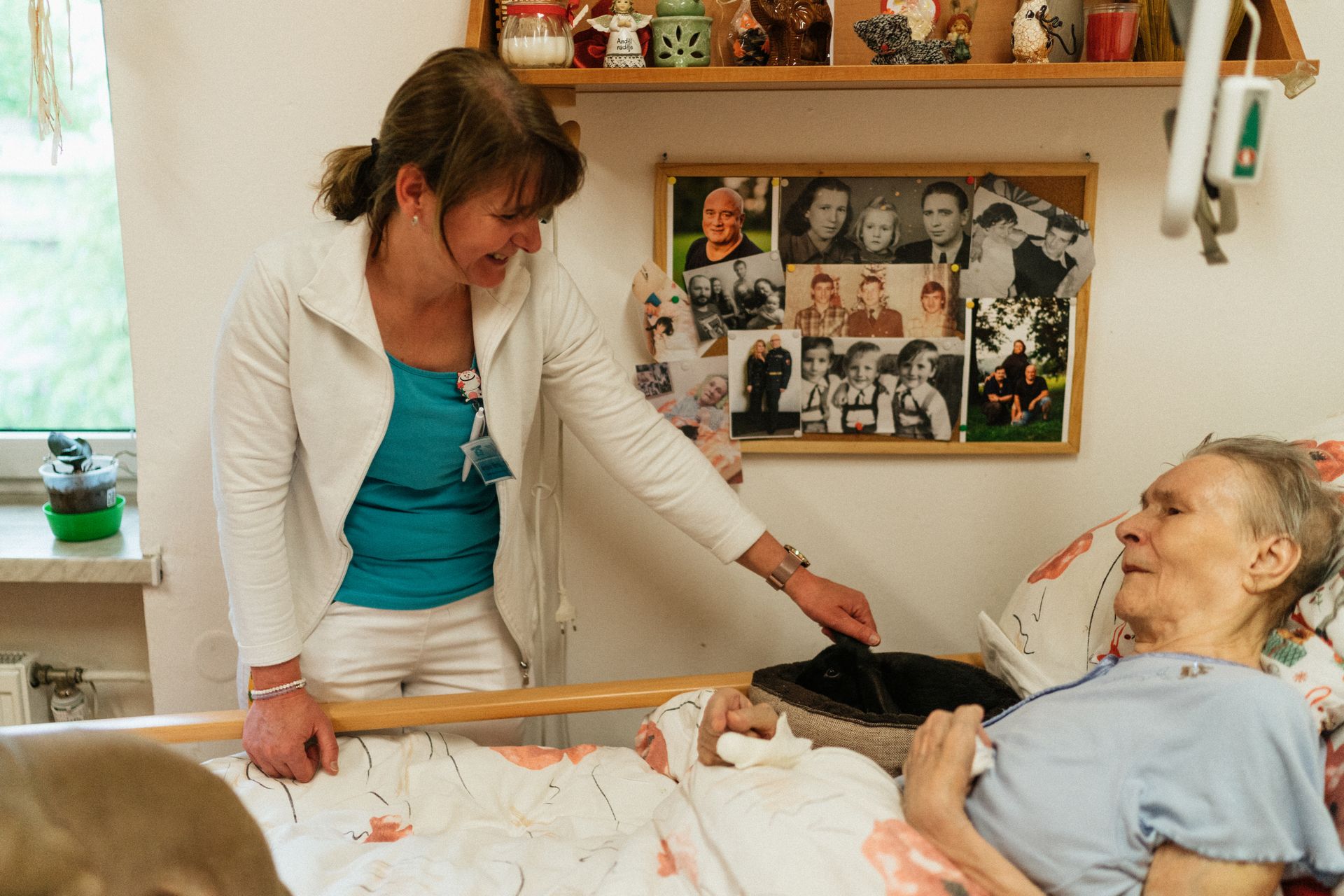
The call came on a Thursday afternoon. A woman in Ohio — let’s call her Diane — had just moved her 78-year-old mother into a memory care community outside Columbus. The brochure had said $6,800 a month. The first invoice said $9,200. When Diane called the business office, she learned about the “care level assessment” conducted during the first week: her mother had been classified as Level 3, adding $1,400 a month. The incontinence care add-on was another $600. Medication management: $400.
None of this had been mentioned during the tour. All of it was in the contract she’d signed, buried in an appendix.
Diane’s story isn’t unusual. It’s the standard onboarding experience for memory care in America — an industry where the advertised price and the actual price routinely differ by 25 to 40 percent, where the most vulnerable consumers make the largest financial commitment of their lives under the worst possible conditions: a dementia diagnosis, a hospital discharge deadline, and 72 hours to decide.
What the numbers actually say
The national median cost for memory care reached $8,019 per month in 2026, according to SeniorLiving.org’s annual survey — roughly $96,228 a year, or $267 a day. Genworth’s 2026 Cost of Care Survey, the industry’s longest-running benchmark, puts the figure at $7,908 monthly for a private room. Other surveys land lower: A Place for Mom’s data suggests around $6,450, while the ElderCare Index reports $5,739. The spread reflects different methodologies and facility mixes, but every serious measure agrees on the direction: up, relentlessly, roughly 5 percent a year.
The geography is brutal. Hawaii’s median exceeds $14,399 a month. South Dakota sits at $5,538. Massachusetts and Connecticut routinely top $10,000. A family in one state pays triple what a family in another pays for the same diagnosis — not because the care is three times better, but because labor costs, real estate, and regulatory requirements diverge wildly.
Memory care commands a 15 to 25 percent premium over standard assisted living, and the premium is real: secured units to prevent wandering, staff trained in dementia-specific behavioral management, lower resident-to-caregiver ratios, structured cognitive programming. A resident experiencing sundowning or aggression needs interventions that cost money to deliver safely. Nobody disputes that the care costs more. The dispute is about whether families should learn the actual price before or after they sign.
The USC Schaeffer Institute estimates Alzheimer’s and related dementias will cost the United States $818 billion in 2026. Family caregivers provide 6.8 billion unpaid hours valued at $237 billion. These are staggering figures. But they describe the system’s cost. They don’t help Diane figure out whether she can afford month fourteen.
The transparency gap
Here’s what makes memory care pricing different from every other major consumer expense: you can’t comparison-shop. Try calling five memory care communities and asking for their all-in monthly cost for a moderate-dementia resident. You’ll get five different answers, in five different formats, with five different sets of exclusions. One quotes base rent. Another bundles care levels. A third won’t commit to anything until after the assessment — which happens after move-in.
Compare this to buying a car, where the sticker price is the starting point for negotiation, or booking surgery, where the No Surprises Act now requires good-faith estimates. Memory care operates in a pricing dark age. The consumer is making a $100,000-a-year decision with less price information than they’d get buying a refrigerator.
The industry’s defense has some merit: dementia is heterogeneous. A resident in early-stage cognitive decline needs dramatically less support than someone with advanced Alzheimer’s and behavioral disturbances. Any honest pricing model must account for acuity. A flat rate would either overcharge the early-stage resident or bankrupt the facility when the late-stage resident arrives.
But acuity-based pricing doesn’t require opacity. Hospitals manage to publish DRG-based estimates. Universities publish tuition schedules with fees itemized. The memory care industry could publish its care-level definitions, its assessment criteria, and its fee schedule for each level. Most don’t. The ones that do tend to win on trust — and, tellingly, on occupancy.
What’s changing
Regulatory pressure is building. Several states have introduced or are considering legislation requiring assisted living and memory care communities to publish standardized pricing disclosures. The federal No Surprises Act, while focused on medical billing, has created a cultural expectation that healthcare-adjacent pricing should be transparent. Advocacy groups, notably AARP, have made pricing transparency a legislative priority.
Technology is nibbling at the edges. Cost-comparison platforms aggregate self-reported pricing data. Some forward-thinking operators publish interactive pricing calculators. But the data remains fragmentary — self-reported, unverified, and often outdated within months.
The demographic math makes this urgent, not theoretical. Ten thousand baby boomers turn 65 every day. Seven in ten Americans will need long-term care. The Alzheimer’s Association projects 13.8 million Americans living with Alzheimer’s by 2060, nearly double today’s figure. Every one of those families will face Diane’s Thursday afternoon phone call.
The facilities that thrive in the next decade won’t just be the ones with the best care — though that matters enormously. They’ll be the ones that figured out pricing transparency before the regulators forced it. Trust, in a market where the customer is grieving and the product costs six figures, isn’t a nice-to-have. It’s the entire business model.
Diane kept her mother in the community. The care, she says, is genuinely good. But she tells every friend who asks: “Get the assessment criteria in writing before you sign. And budget 30 percent more than the brochure.”
The category-defining name in memory care cost transparency — memorycarecosts.com — is currently available for acquisition by the firm positioned to own this space.
- Medical/functional: The applicant must need a nursing-home level of care, as determined by a state assessment. For dementia patients requiring memory care, this test is almost always met — the diagnosis and functional impairment qualify.
- Financial: The applicant must have limited income and assets. The asset limit is typically $2,000 in countable assets. Income limits vary by state but generally must be below the cost of care (if income exceeds the limit, Miller Trusts / Qualified Income Trusts can bridge the gap in most states).
- Primary residence (up to $713,000 in equity in most states for 2026, if the applicant or spouse lives there or intends to return)
- One vehicle
- Personal belongings and household goods
- Prepaid funeral/burial arrangements (up to state limits, typically $10,000–$15,000)
- Certain life insurance (small face-value policies)
- Bank accounts, investments, retirement accounts
- Second properties
- Cash value of large life insurance policies
- Transfers to a spouse (unlimited)
- Transfers to a disabled child
- Transfers to a caregiver child who lived in the home for 2+ years and delayed institutionalization
- Transfers to certain special needs trusts
- Room and board in a Medicaid-certified memory care facility
- All custodial care (assistance with ADLs, supervision, behavioral management)
- Medication management
- Basic medical supplies
- Not all facilities accept Medicaid. Many premium memory care communities are private-pay only. The Medicaid-certified options may have waitlists. Planning the transition early — identifying Medicaid-accepting facilities before they're needed — prevents crisis placement.
- The resident contributes income. Medicaid doesn't let the resident keep their Social Security check — most income goes to the facility as the "patient pay amount," with the resident retaining a small personal needs allowance ($30–$200/month depending on state).
- Estate recovery. After death, states must seek reimbursement from the deceased's estate for Medicaid long-term care expenditures. The home — often the largest remaining asset — is the primary target. Proper planning (transferring the home to exempt beneficiaries, Lady Bird deeds in applicable states) addresses this.